
When Does Crypto Become Just Finance? Wachsman’s David Answers
In early 2014, David Wachsman thought Bitcoin was a scam. Two nights of arguing with the head of a New York Bitcoin exchange changed his mind. About a year later, he started what he describes as the first communications firm built for the Bitcoin industry. Twelve years on, his question is no longer whether crypto works. It is when crypto stops being a separate industry and becomes simply part of finance.
In early 2014, David Wachsman thought Bitcoin was a scam. Two nights of arguing with the head of a New York Bitcoin exchange changed his mind. About a year later, he started what he describes as the first communications firm built for the Bitcoin industry. Twelve years on, his question is no longer whether crypto works. It is when crypto stops being a separate industry and becomes simply part of finance.
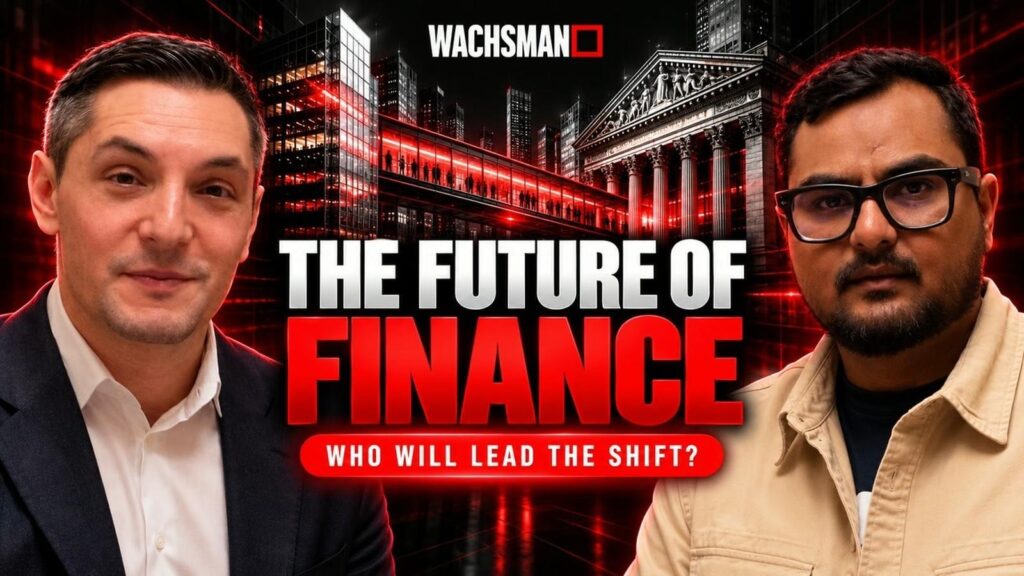
On the sidelines of Token2049 in Singapore, Mohammad Ahmad Khan, co-founder of The Blockopedia, sat down with David Wachsman, Founder and CEO of Wachsman and President of Hawkeye Digital, Inc., for the TBP Podcast. In an episode of just over 19 minutes, they covered David’s Bitcoin origin story, why facts matter so much in a volatile market, what Hawkeye Digital invests in, why founders cannot pay for earned media, and what mainstream finance still needs before crypto is “just finance”.
Key Takeaways
- David Wachsman thought Bitcoin was a scam until a long debate with the CEO of New York exchange Coinsetter in 2014. About a year later, he founded Wachsman, which he calls the first communications firm focused on the Bitcoin industry.
- He describes most crypto assets as “effectively digital bearer bonds”: once value moves, there are no take-backs. That makes credible facts essential.
- He expects digital asset companies to start disclosing information like public companies, in a standard format.
- Hawkeye Digital, where he is President, is a publicly traded private equity and merchant banking platform. It takes equity, not tokens, in revenue-generating companies.
- His main message to founders: earned media cannot be bought or controlled. A company controls only what it says.
- He says blockchain is “nowhere near fully adopted” in mainstream finance, and expects tokenized securities to be far more common by 2030 to 2032.
From “Bitcoin was a scam” to the first crypto communications firm
Everyone in crypto has a Bitcoin origin story, David says. His starts at a New York technology party in the early mobile era, full of founders launching iPad apps and small social networks.
One of the most interesting people there was the CEO of a Bitcoin exchange called Coinsetter. It was the beginning of 2014, and David thought Bitcoin was a scam. The two argued for hours. David kept trying to find a hole in how Bitcoin worked, because he did not believe digital money could possibly work.
It took that night and the next, but David lost the argument. “It turns out there were no holes. It turns out Bitcoin actually works. I was wrong,” David says. From then on, he was convinced this was the future.
Coinsetter was a New York Bitcoin exchange founded in 2012. Kraken acquired it in early 2016, according to Kraken’s own blog.
About a year after that debate, David started Wachsman as the first dedicated public relations and strategic communications firm for the industry. He says crypto tripled in 2016 and rose about 30 times in 2017, and that Wachsman was the largest firm of its kind in the world the whole time.
What twelve years in crypto communications looks like
Wachsman’s first office was on Wall Street. David says the firm has been in Europe since 2017 and Singapore since 2018, with offices in London and Geneva and a presence in Seoul and the UAE.
When new layer one blockchains arrived, David says, Wachsman helped launch them. The work started with three questions for founders: “What are they building? How is it differentiated? Why does it need to exist?”
He lists other chapters:
- Layer two networks, when Ethereum and other protocols needed to scale.
- Security tokens, when many still saw them as a bad idea, and the early trading and tokenization platforms that later became today’s securitizers.
- Decentraland, which he calls one of the first projects to use what became NFT technology.
- The rise of meme coins.
Today, he notes, the largest stock exchanges are adopting blockchain for clearance, settlement and trading.
Why facts matter in a “dangerous” industry
Ahmad asks how the industry should tell its story and educate newcomers. David starts with sources. “It’s essential to learn from credible people who are going to give you real facts when learning about this industry,” he says.
His reason is the asset itself. For the most part, he says, crypto deals in “effectively digital bearer bonds”. Real value moves across the internet, and there are no take-backs once it is transferred. Markets are volatile, and losses are common. “Millions of people have lost millions of dollars over the years in this industry. I’m one of them,” he says.
Information asymmetry and bad intel make it easy to be taken advantage of. So media companies, he says, must tell the facts and not cover things up. Companies carry the same duty.
He also makes a forecast. “We’re going to see digital asset companies behave more like public market companies,” he says. They will disclose in a standardised way, either because regulation requires it or because the industry enforces it on itself, like a self-regulatory organisation (SRO). The reason, in his words: “we’ve seen too many people hoodwinked.”
At Wachsman, he says, the team verifies its facts as far as it can, then works with credible reporters who check everything again before publication. “This is a dangerous industry in many ways. It’s also extraordinary. It’s the most remarkable opportunity set, as far as I’m concerned, on Earth,” he says.
What Hawkeye Digital does
David describes Hawkeye Digital as a “publicly traded private equity and merchant banking platform”. Even as a public company, it invests in companies that meet its criteria, often in digital assets, and helps guide them through a capital markets journey while providing services.
The key word is equity. “We love tokens, obviously. We love crypto. But we take equity positions in these companies, and that’s our intended strategy,” he says.
His timing argument is about the United States, where he says the SEC, the CFTC, the OCC and other regulators have become more innovation-friendly. He expects more capital formation and more crypto companies going public.
The company is new in its current form. According to a Business Wire release on OTC Markets, an investment group led by David took a controlling interest in Hawkeye Systems, Inc. in 2026 and named him President. It rebranded as Hawkeye Digital, Inc. in August 2026 and trades over the counter as HWKE.
David lists what Hawkeye looks for:
1. Product-market fit, with a real user base.
2. Revenue today, and preferably real profits.
3. A need for capital to grow, for example to buy licences, cross borders or enter new markets.
He calls Hawkeye sector-agnostic. Wallets, stablecoin infrastructure, tokenization platforms and payments firms could all fit. These are not venture-stage bets, he says, but closer to private equity deals. “The reality is there’s no private equity market in crypto, certainly not a well-developed one by any means,” he says, and Hawkeye aims to act as a substitute. He is also interested in roll-ups, where merging two companies makes them more valuable together.
He invites founders to email [email protected]. Because Hawkeye is listed, he adds, anyone can track its performance, and “we disclose everything.”
Why Token2049 matters to Wachsman
Wachsman has worked alongside Token2049 since its first edition in Hong Kong in 2018, David says. The series has since run in Dubai, Singapore and London.
“It’s the largest conference series for crypto in the world,” he says, praising its speakers, sponsors and organisation. He expected this year’s edition, with its side events, to sell out and fill effectively all of the Marina Bay Sands conference centre.
Readers should know the relationship behind those words. In an August 2026 announcement, Wachsman marked eight years as Token2049’s Agency of Record. The same release said the 2025 Singapore edition sold out with more than 25,000 attendees from over 7,000 companies.

When does a technology grow up?
Wachsman began in Bitcoin and now works across finance, AI and other emerging technology. Ahmad asks when a technology stops being “emerging” and becomes mainstream.
David points to the calendar. Token2049 Singapore took place in October 2026, the same month as Bitcoin’s 18th anniversary. Satoshi Nakamoto published the Bitcoin white paper on 31 October 2008. “Bitcoin turns 18. So, Bitcoin is a full-fledged adult this month,” he says. “I don’t think Bitcoin’s emerging technology.”
David says Wachsman now also works with large social networks, credit card companies and banks, but still likes complex startups. “The more complicated, sophisticated the better,” he says. If something is hard to explain but can make a difference, “we want to be there”.
Earned media: you cannot pay for it
Ahmad asks what David wishes founders understood before walking into Wachsman. “I wish more founders knew that earned media, you can’t pay for. There’s no bribing. You can’t control it. Reporters are going to write whatever they’re going to write,” he says.
He sees this as healthy. As a proud American, he believes in the First Amendment: reporters may write what they want, as long as it is accurate.
That is not a free pass for the press. He says “we should hold reporters accountable for their inaccuracies or for misinformation they put out there”. But founders need to accept the limits. “What you can do is control what you say,” he says. Done right, that shapes what is eventually published. “Earned media is earned, and there’s no two ways about it.”
What has to happen before crypto is “just finance”?
The industry has spent years talking about adoption, with ETFs and new rules along the way. Ahmad asks what must happen before people stop saying “adoption” and simply call it finance.
David’s answer: not yet. “Blockchain technology is nowhere near fully adopted in mainstream finance, not yet,” he says. Tokenized securities are still hard to trade, and “there’s effectively no liquidity for almost any of them yet.”
His test is volume. When tokenized securities, and tokenized commodities beyond crypto, trade billions of dollars a day, he will say the industry is past the adoption curve. Until then, they are separate industries. “Crypto is a niche, it’s a large niche of overall finance,” he says. He expects the two to blend further, and says “it seems pretty imminent.”
Policy is the brake. David says the United States had no pro-innovation set of regulators until President Trump was re-elected, and change still takes time. He also points to the defeat of the CLARITY Act. That federal market-structure bill failed a Senate cloture vote on 15 September 2026, short of the 60 votes needed, according to analyses by DLA Piper and Hunton.
Without that law, David says, regulators have to write the rules themselves. Rules need time to take effect and comment periods for critics, including traditional banks that may not want to be replaced by digital asset firms. Still, by 2030 or 2032, he expects tokenized equities and securities of every type to be “a heck of a lot more omnipresent.”
His last word for Token2049 visitors
David’s closing advice is to come and learn. “Have an open mind, ask hard questions,” he says. Make sure what you hear is factual, and check it again later. A conference gives direct access to founders, executives and staff from across the world. “Get someone in person and ask them hard questions. They’re going to be thrilled to answer.”
Final thoughts
David Wachsman’s message is consistent: in a market where transfers are final and information is uneven, facts are the main protection. His view of earned media follows from the same idea. A founder shapes a story by being clear and accurate, not by paying for it.
Some of what he shared is fact, such as Wachsman’s 2015 founding and Hawkeye Digital’s 2026 relaunch. Other parts are forecasts: standardised disclosures, more crypto listings and common tokenized securities by 2030 to 2032. Those depend on rules still being written after the CLARITY Act stalled. Readers should also note that David leads a firm investing in crypto companies and an agency that represents Token2049.
Watch the full conversation on the TBP Podcast YouTube channel.
Frequently Asked Questions
Q: Who is David Wachsman and what does Wachsman do?
David Wachsman founded Wachsman, a public relations and strategic communications firm, in 2015 and is its CEO. He describes it as the first such firm dedicated to the Bitcoin industry. He is also President of Hawkeye Digital, Inc.
Q: What is Hawkeye Digital?
Hawkeye Digital, Inc. (OTC: HWKE) is a publicly traded private equity and merchant banking platform. It takes equity stakes in revenue-generating companies, often in digital assets, and supports them with capital and advice for growth, roll-ups and a possible move to the public markets.
Q: Can crypto companies pay for media coverage?
Not for earned media. David says earned media cannot be bought or controlled, and reporters will write what they choose as long as it is accurate. A company can only control what it says.
Q: When will crypto become part of mainstream finance?
David says blockchain is “nowhere near fully adopted” in mainstream finance. He would call it just finance once tokenized securities and commodities trade billions of dollars a day, and he expects that to look far closer by 2030 to 2032. This is a forecast that depends on regulation.
Q: What does “digital bearer bonds” mean in crypto?
David uses the phrase for how most crypto assets behave: once a transfer is made, there are no take-backs. That is why he stresses credible sources. This article is not investment advice. Crypto assets and listed shares are volatile and can lose value.